What to look for
Swarmers head toward light — often found near windows. Discarded wings on windowsills means they've already been inside and dropped wings to mate. Subterranean termites swarm Feb-May after warm rains. Drywood termites swarm Aug-Nov.
costs U.S. homeowners billions of dollars a yearTermite damageUSDA  A slow leak under a sink keeps the wood damp, and damp wood is exactly what termites are looking for.
Why termite damage goes unnoticed.
Because the damage is hidden, a professional inspection is the only reliable way to catch a termite problem early. Termites eat wood from the inside out, so by the time the damage is visible, it has usually been going on for a while. Mud tubes on the foundation, hollow-sounding wood, and wings near windows are the signs to look for.
Treatment targets the colony, not the wood.
Ask what the treatment covers and what a re-inspection includes. Termite control works by treating the soil and the colony so the termites stop feeding and the colony dies out, not by patching the damaged wood. A liquid barrier or bait system is placed around the foundation, and the repair work is separate.
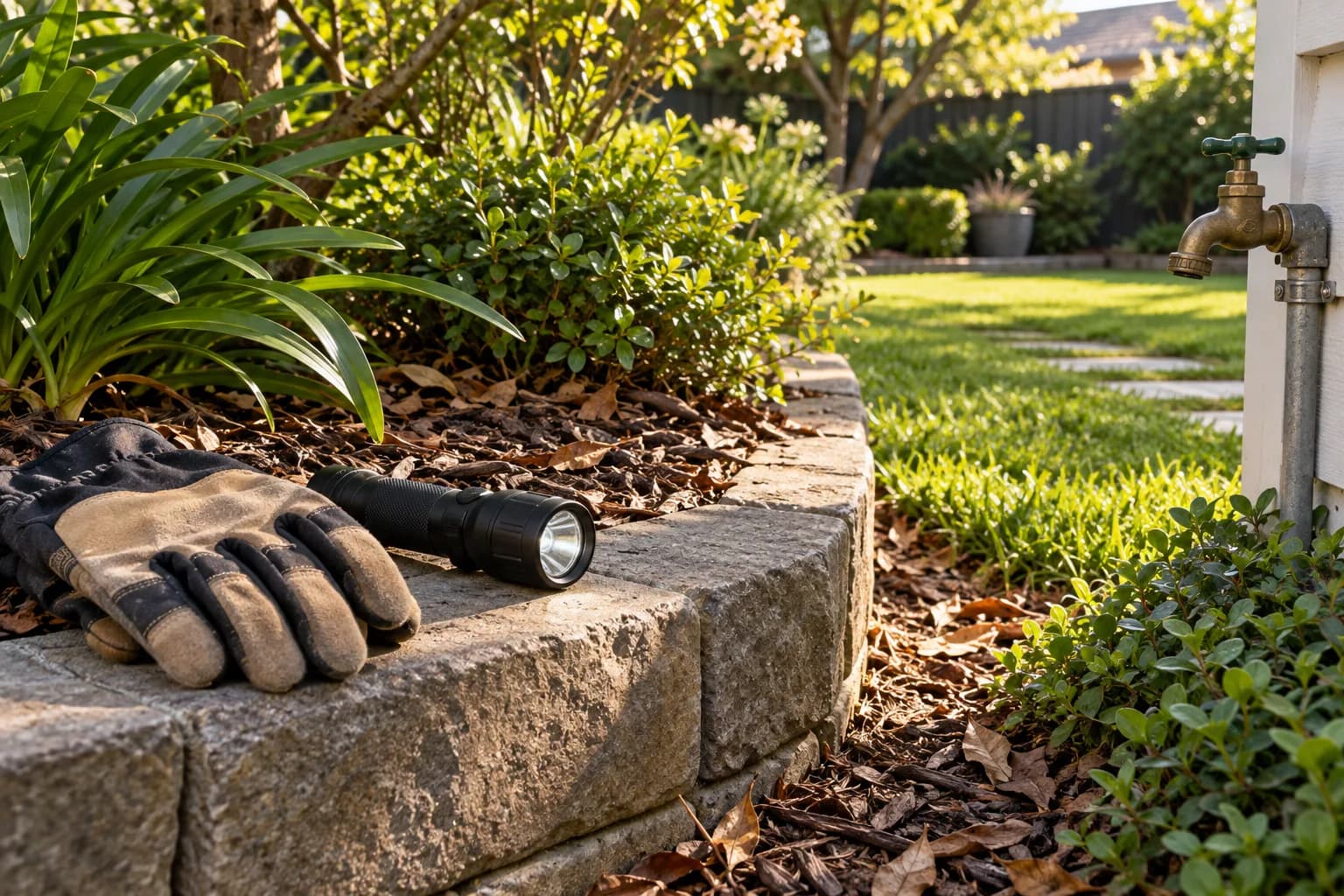 Mulch piled against the house and a dripping hose bib give termites moisture and cover. Pull mulch back and fix the drip.
What a good inspection covers.
In Termite Swarm Season, the result should be a written plan that names the method, the number of visits, and what the follow-up covers, not just a vague promise to spray. In Termite Swarm Season, a good inspection starts where the activity is and works outward, looking for the nest or the hiding spots rather than just the pests you can see. In Termite Swarm Season, the technician should identify the species, map where the trails or harborages are, and explain the plan before quoting.
Prevention that holds up.
Re-check the problem areas each season, because a single missed entry point or food source is usually why the pest came back. Prevention removes what is drawing the pest in. Keep food sealed and crumbs cleaned up, fix the moisture that pests need, and seal the entry points they are using.
What a termite swarm actually is.
Finding discarded wings near windows and doors after a swarm is the classic sign to look for. A termite swarm happens when a mature colony sends out winged reproductives to start new colonies, usually on a warm, humid day in spring. The swarmers are a sign that an established colony is nearby, not a new problem just beginning.
Why swarmers inside the house are a warning.
Seeing swarmers indoors usually means the colony is inside or directly against the structure, because they emerge from the wood or soil nearby. Outdoor swarmers are common and less concerning, but indoor swarmers are worth an inspection right away, before the next generation gets established.
When to call for help
Immediately if you see swarmers indoors or discarded wings. Swarmers indoors almost always mean an established colony inside your structure.
Where you live matters
In Termite Swarm Season, providers that are clear about these up front are usually the easiest to work with. In Termite Swarm Season, schedule the inspection when you have time to walk the property with the provider. In Termite Swarm Season, seeing where the activity is and asking questions in person usually leads to a better plan than a quote over the phone. In Termite Swarm Season, keep a short note of when you first noticed the issue and what you have tried. In Termite Swarm Season, that timeline helps the provider understand how long the problem has been building and what is most likely to work. Compare at least a couple of written quotes before deciding. In Termite Swarm Season, the lowest price is not always the best value if it leaves out a follow-up visit or a key part of the treatment. In Termite Swarm Season, after the work is done, ask what changed and what to watch for next season. In Termite Swarm Season, good pest control is as much about prevention as it is about treatment, and the best plans include both. A good provider starts with the problem, not the product. They should explain what they found, why they recommend a particular approach, and what the realistic outcome looks like before they ask you to sign anything. Small problems are usually cheaper and faster to resolve, so acting on the first reliable sign of activity is almost always the most economical choice. Waiting tends to grow the affected area and the bill. Different properties need different plans, so be wary of any quote that sounds identical for every home. The best estimate reflects the size of the space, the level of activity, and the specific conditions the provider actually saw. If a provider will not put the plan in writing or dodges questions about licensing and insurance, keep looking. A written proposal protects both of you and makes the comparison between providers fair. Many plans include a short guarantee or follow-up window, but the terms differ a lot. Ask exactly what is covered, for how long, and what would trigger an extra visit before you decide. Staying on a routine schedule — even a light one — is often what keeps a small problem from becoming an annual headache. Ask what a maintenance plan would look like and what it would cost. The most useful first step in Termite Swarm Season is to note where you have seen termites activity and when it appears, so an inspection is faster and the quote more accurate. In Termite Swarm Season, checking the usual entry points, moisture spots, and sheltered areas near the structure usually turns up the conditions that are letting them in. A local provider who knows Termite Swarm Season can point out the specific things that matter most here before you commit to a plan. In Termite Swarm Season, before you book, ask whether the inspection is included, what the treatment plan covers, how many visits to expect, and what the written quote includes. In Termite Swarm Season, getting the scope, the prep steps, and any follow-up terms in writing makes it much easier to compare providers fairly, and a good provider will walk you through each of these without pressure. In Termite Swarm Season, a little preparation usually makes the visit more useful: clear access to the areas where you have seen activity, put away loose items, and note anything you have noticed recently. In Termite Swarm Season, if you have photos or a rough timeline of when the problem started, share them, because those details help the provider confirm what is going on and give you a more accurate scope and price. In Termite Swarm Season, after treatment, ask what to watch for and when a follow-up visit would make sense. In Termite Swarm Season, most problems do not disappear after a single visit if the conditions that caused them are still present, so the plan should spell out what changes afterward and how you will know it worked. Prevention is the part that keeps the problem from coming back. In Termite Swarm Season, that usually means sealing the gaps and moisture issues the inspection turned up, adjusting what is stored near the structure, and staying on top of the small warning signs before they become a bigger job. Most bat work is about the roofline and the attic. In Termite Swarm Season, bats squeeze through gaps as small as three-eighths of an inch, so an inspection looks closely at ridge vents, gable vents, soffits, and the joints where the roof meets the wall. In Termite Swarm Season, a short watch at dusk is often the clearest way to confirm where they are getting in and out. In Termite Swarm Season, if you have seen a bat indoors, keep the room closed and do not handle it bare-handed. In Termite Swarm Season, a bat found in a room where someone was sleeping, or one that may have touched a child or pet, is treated as a possible exposure, so contact public health or a doctor before releasing it. In Termite Swarm Season, exclusion is the durable fix: one-way devices let the bats leave but not return, and then every remaining gap is sealed. In Termite Swarm Season, it has to be timed outside the maternity season so young bats are not stranded inside, which is why it is usually a professional job rather than a do-it-yourself one. In Termite Swarm Season, droppings and urine build up under a long-standing roost, and cleaning them disturbs dust that can carry spores, so cleanup should be done with the right protection and often as a separate scope from the exclusion work itself. In Termite Swarm Season, ask for everything in writing before you commit: the scope, the price, the preparation steps, and what happens if the problem returns.
 Keep the inspection diagram, treatment record and warranty together. Buyers and inspectors will ask for them later.
Questions people ask
Termite swarmers vs flying ants — how to tell?
Termite swarmers: straight antennae, equal-length wings, thick waist (look like tiny cigars with wings). Flying ants: bent antennae, unequal wings (front pair larger), pinched waist (look like ants with wings).
How often does a termite treatment need a callback?
In Termite Swarm Season, termites are best caught early through inspection, because the damage is hidden inside wood until it is far along. In Termite Swarm Season, a professional inspection looks for mud tubes, damaged wood, and swarming activity, and treatment targets the soil and the colony rather than just the visible wood.
Sources (9)
The facts in this article come from the public sources listed above. Every home is different, so ask the company you talk to about pricing and what’s included. Published by Termite Exterminator · Updated September 11, 2026 · How we write these guides