The short version
Most termite treatments for a home in Greenville cost about $1,200–$3,500. In Greenville, bait systems cost about the same to install, plus a yearly monitoring fee. An inspection usually runs $75–$250.
- Most treatments in Greenville cost about $1,200–$3,500.
- Bait systems add a yearly monitoring fee.
- Inspections usually cost $75–$250.
- Compare what each quote covers, not just the total.
- Insurance usually doesn’t cover termite damage.
Anyone in Greenville who owns, rents out, or is buying a home and wants to know whether termites are a real concern.
What to look for
Termites work quietly. A colony can feed inside a wall for years. Average winter lows near 33°F slow termites near the surface around Greenville, but they move deeper and keep feeding under heated homes. Spongy floors or bubbling paint usually mean long-running damage. So it's worth an inspection, even for one or two signs.
- 1Piles of identical shed wings on windowsills.
- 2Crumbling baseboards behind furniture.
- 3Small kick-out holes in exposed wood.
- 4Termite tubes hanging down from ceilings or joists.
- 5Live pale insects inside a broken mud tube.
- 6Sagging or spongy floors near exterior walls.
Why it’s worth acting soon
- Colonies grow and spread every year they go untreated.
- Damage hides behind drywall, flooring and trim.
- Homeowners insurance usually doesn’t cover termite damage.
- An active infestation can complicate a home sale.
- Formosan colonies are large and can do serious damage quickly.
🧮
Estimate termite treatment cost in Greenville
Adjust for your situation to see a ballpark range.
Estimated range
A rough guide only. Your quote depends on your house and what the inspection finds.
Treatment options and typical costs
Termite Inspection and WDI Report
$75–$250
The inspector checks the foundation, garage, attic and damp spots. Bring up anything you’ve noticed.
- Time
- 60–120 minutes
- Best for
- Every job, real estate closings, and yearly peace of mind
Liquid Soil Termiticide Barrier
$1,200–$3,500 (often $3–$16 per linear foot)
This is the workhorse treatment for subterranean termites in Greenville. Applicators trench, drill through slabs where needed, and saturate the soil.
- Time
- Half a day to a full day
- Best for
- Active subterranean termites; fast knockdown around the foundation
Bait Station System with Monitoring
$1,500–$3,500 install, plus $300–$500 per year
Ask how many stations they plan for your Greenville home, how often they'll check them, and what the annual fee covers.
- Time
- 2–4 hours to install; checked quarterly
- Best for
- Colony elimination, wells and slabs, homes near water
Fumigation for Drywood Termites
$1,200–$4,000 (often $1–$4 per square foot)
Tenting is mainly for drywood termites. Most homes here never need it.
- Time
- 2–3 days including tenting and aeration
- Best for
- Widespread drywood termites throughout a structure
Prices are typical published ranges. Ask what’s included before you compare quotes.
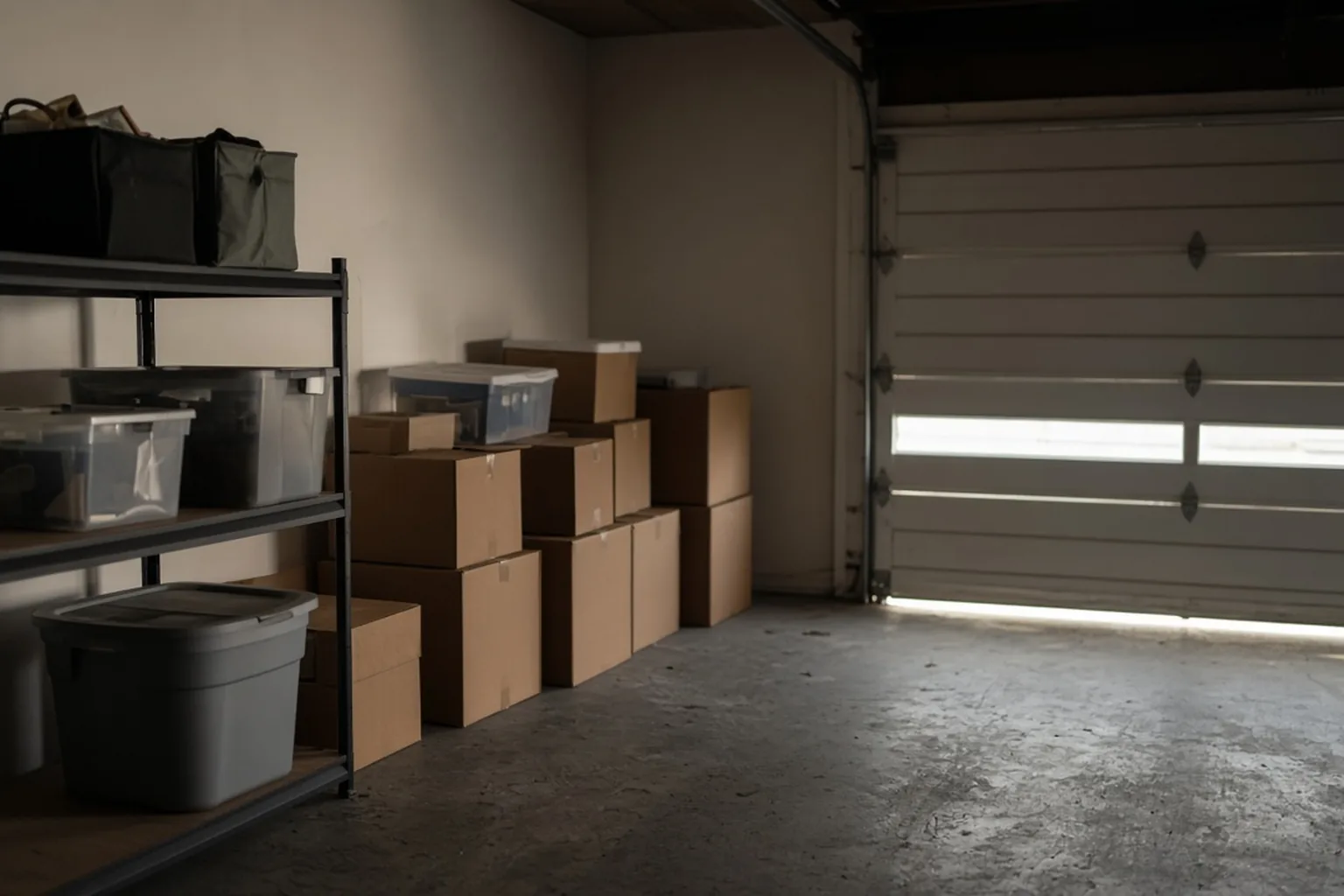 Cardboard boxes stacked on a garage slab are termite food sitting right on their doorstep. Keep storage on shelves.
What termite work costs in Greenville.
- A typical home in Greenville is worth around $195k, so a $1,200–$3,500 treatment is a small share of what's at stake. With the crawl spaces common around Greenville, the soil is easier to reach. Tight or wet crawl spaces take longer, though. - Termite Inspection and WDI Report: $75–$250 - Liquid Soil Termiticide Barrier: $1,200–$3,500 (often $3–$16 per linear foot) - Bait Station System with Monitoring: $1,500–$3,500 install, plus $300–$500 per year - Fumigation for Drywood Termites: $1,200–$4,000 (often $1–$4 per square foot)
Local termites conditions in Greenville.
Greenville sits in a humid subtropical climate, and that sets the pace for termite activity here: spring swarm season (March-May), warmer earlier in the south. In Greenville, the area is mostly suburban, so termites pressure can differ from one block to the next depending on how tight the entry points are and how much food, water, or shelter is close by. An inspection in Greenville usually starts outside and works inward, checking the foundation, gaps around doors and windows, and any moisture or clutter near the structure first. Knowing Greenville's seasonal timing lets you schedule treatment before the busy stretch rather than after it, which usually means faster service and a more accurate quote. A provider who works Greenville and North Carolina every day can point out the specific conditions that matter most here, and getting the scope, price, and follow-up terms in writing makes it easier to compare options.
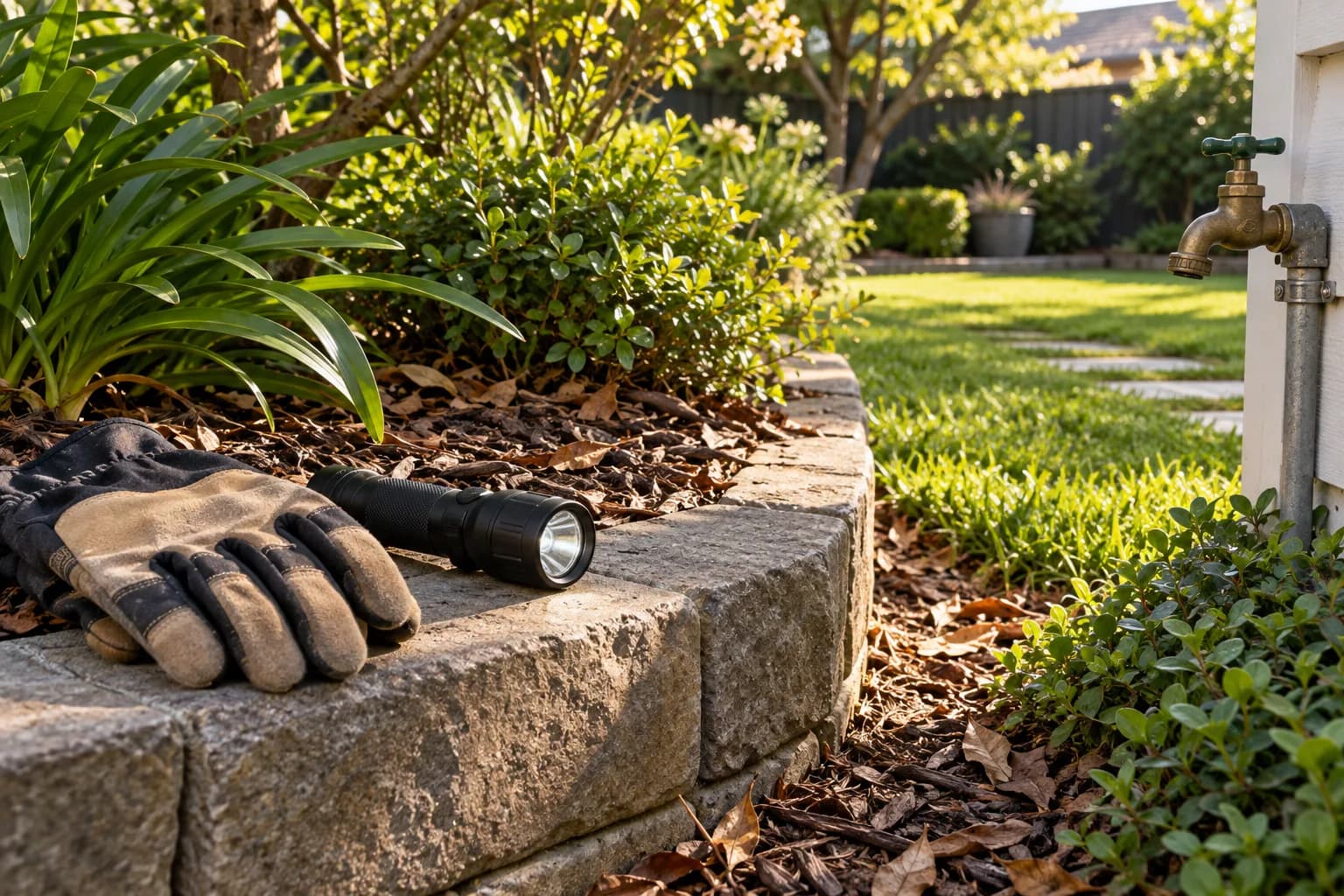 Mulch piled against the house and a dripping hose bib give termites moisture and cover. Pull mulch back and fix the drip.
Which termites live around Greenville.
The termite you're most likely to meet in Greenville is the eastern subterranean termite. It nests in soil and builds mud tubes to reach wood. It needs steady moisture. Formosan termites have turned up in parts of North Carolina. They're less common. Their colonies are much bigger, though.
When termites swarm here.
Swarm season is when termites show themselves. In Greenville, eastern subterranean termites usually swarm from April through May, typically on a warm, sunny day after rain. In Greenville, formosan termites in North Carolina swarm later, from late April into June. Look for them on warm, humid evenings around porch lights. A swarm outside means a colony is nearby. A swarm inside usually means it's in the house. Save a few in a bag, or snap a clear photo.
Where to look around your house.
A lot of houses around Greenville are built over crawl spaces, and that's usually where termites start. Take a flashlight underneath. Check the piers, the sill plate and the floor joists. Standing water or a musty smell needs fixing either way. The same advice applies across the area, from Greenville out to Goldsboro.
A year of termites in Greenville.
- Spring: swarm season. In Greenville, expect it from April through May. Check windowsills and light fixtures for wings. - Summer: with highs around 90°F in Greenville, termites follow moisture, so watch AC drain lines, sprinkler zones and hose bibs. - Fall: with about 49 inches of rain a year in Greenville, make sure gutters and downspouts carry water well away from the foundation. - Winter: a good time to book an inspection in Greenville, before swarm season starts.
Ways to keep the cost down.
- Get two or three quotes, and compare what each one covers. - Fix leaks and drainage first. Moisture brings termites back. - Ask about both bait and liquid options for your house. - If you already have a warranty, keep the renewal current. - Book before swarm season, when schedules fill up.
What happens at an inspection.
Most inspections take an hour or two. The inspector walks the outside of the house first. They check the foundation, the soil line and nearby wood. Inside, they check the garage, baseboards, plumbing gaps and the attic. They'll also go into the crawl space. A moisture meter and a probe help them find hidden activity. Afterward, ask them to show you what they found. Photos help.
Termites or ants?
- Wings: termite wings are all the same length. Ant wings aren’t. - Waist: termites are thick through the middle. Ants are pinched. - Antennae: termite antennae are straight. Ant antennae bend like an elbow. - Debris: termites leave mud. Carpenter ants leave sawdust. - Tunnels: termite galleries are packed with mud. Ant tunnels are clean and smooth.
Getting ready for treatment day.
Soil treatments and bait stations need little prep. Clear a path along the outside walls. Move stored boxes away from garage walls. Mark sprinkler heads and any buried lines. Keep pets and kids inside while the crew works outside. Ask how long to stay off treated soil. Any drill holes in a slab or patio get patched.
Mulch and termites.
Keep mulch thin and pull it back from the foundation. A dry strip along the house lets you spot mud tubes. Wood chips right against siding hold moisture termites like.
Questions to ask before you sign.
- Which termites did you find, and where? - What product or system will you use? - Is the whole foundation treated, or just one spot? - What does the warranty cover, and for how long? - What does the yearly renewal cost? - What do I need to do before and after treatment?
What affects the price
- Warranty type: retreatment only or damage repair.
- Linear feet of foundation to be treated.
- Local labor rates and licensing requirements.
- Annual renewal and monitoring fees.
- Attached garages, decks, and additions.
- Wells, drains, or water features limiting chemical use.
- Liquid barrier versus bait station system.
- Amount of drilling through concrete and patios.
📊
What's your biggest concern about termite control costs?
When to call for help
Call if you see mud tubes, pellets or an indoor swarm. Hollow-sounding wood is another clue. Buying or selling? Get a wood-destroying insect (WDI) report either way. Lenders often ask for one. It's also the cheapest termite service. Carpenter ants leave clean tunnels and sawdust. Termites leave mud.
What you can do yourself
Treating an active colony is harder. The product has to reach the whole colony. It also needs even coverage around the entire foundation. Store-bought sprays usually kill only the termites you see. Some of the work is yours. Pull mulch back from the foundation. Fix leaks and clear gutters. Keep firewood away from the house.
Termites in Greenville
Greenville gets about 49 inches of rain a year, and average humidity sits near 73%, so the soil around foundations rarely dries out. Termite activity in North Carolina is above average. Most houses will see termites at some point. With summer highs around 90°F, Greenville's humid subtropical climate decides when local termites are busiest. A typical home in Greenville is worth around $195k, which puts a few hundred dollars for an inspection and prevention in perspective.
Local research
Termites in Greenville, NC: what the public record shows
Before you compare quotes, it helps to know which termites actually live in North Carolina, when they are busiest around Greenville, and what the state figures look like. Everything below links to the agency or university page it came from.
Native subterranean termite species in North Carolina
Multiple species with staggered swarm seasons mean swarmers can appear from late winter into fall.
NC State ExtensionTypical soil termiticide application rate
A proper treatment uses a lot of product; very cheap quotes may mean under-application.
NC State ExtensionTermite species recorded in North Carolina
- Eastern subterranean termite (Reticulitermes flavipes) — UGA calls it 'the most widely distributed subterranean termite, and it is the most common termite found in the eastern United States'; it swarms February through April in Georgi…
- Formosan subterranean termite (Coptotermes formosanus) — FDACS lists it in Florida, Alabama, Georgia, Louisiana, Mississippi, South Carolina, North Carolina, Tennessee, Virginia, Texas, Arizona, California and Hawaii. Colonies contain…
- Dark and light southeastern subterranean termites (Reticulitermes virginicus; Reticulitermes hageni) — UGA: both are 'generally less economically important when compared to R. flavipes'; R. virginicus swarms April–June and R. hageni July–September. Part of the Reticulitermes comp…
When termites are busiest around Greenville
Native species begin swarming in late winter and continue into September or October, usually during the day on warm days following rain (NC State).
The NC Official Wood-Destroying Insect Information Report 'is the only form that is legal for this purpose and is required on almost every residential structure sold', and must be issued by a licensee of the NCDA&CS Structural Pest Control Division. NC State references state rules requiring drilling and treating attached slabs and voids near known activity. FDACS and UGA list NC among Formosan states.
Rules that apply in North Carolina
Sources: NC State Extension; Biology of Subterranean Termites in the Eastern United States (B1209); University of Missouri Extension; Formosan Termite Program. Figures are quoted as the source prints them. How we check our sources
Simple ways to keep termites away
- Keep mulch at least a foot from the foundation.
- Caulk gaps around plumbing and utility penetrations.
- Keep six inches between soil and siding or wood.
- Extend downspouts so water drains away from walls.
- Store firewood well away from the house, off the ground.
- Keep the termite renewal contract current after treatment.
 Keep the inspection diagram, treatment record and warranty together. Buyers and inspectors will ask for them later.
Did you know?
In Greenville, termites are closer cousins to cockroaches than to ants, despite the old nickname white ants.
In Greenville, some tropical termites grow fungus gardens inside the nest and eat the harvest.
Questions people ask
Does homeowner insurance pay for termite damage?
Usually not. Most policies treat termite damage as preventable. That's why catching it early matters.
How much does termite fumigation cost?
Usually $1,200–$4,000, often $1–$4 per square foot. It's mainly for drywood termites. Most homes around Greenville never need it.
How much does a termite inspection cost?
Usually $75–$250. Some companies credit it toward treatment if you go ahead. It's worth asking.
What does a termite warranty cover?
It depends on the plan. Some cover re-treatment only. Others also cover repairs. Ask what's excluded, and whether it transfers if you sell.
How do I choose a termite company?
Make sure they're licensed in North Carolina. Ask which termites they found and what product they'll use. Ask what the warranty covers. Compare the proposals, not just the totals.
What does a WDI report include?
It lists any termites or damage found. It also notes conditions that invite them, like wood touching soil. It only covers areas the inspector could reach.
Is termite treatment safe for kids and pets?
Used according to the label, yes. Soil treatments stay in the ground. Bait stations are locked and buried. Ask for the label and follow any re-entry times.
What is a termite renewal contract?
83% of locations in PCT magazine's 2025 termite market report (about 145 pest-control professionals, 2024 operations) offered annual renewals.
Do most pest control companies treat existing homes for termites?
In Greenville, termites are best caught early through inspection, because the damage is hidden inside wood until it is far along. In Greenville, a professional inspection looks for mud tubes, damaged wood, and swarming activity, and treatment targets the soil and the colony rather than just the visible wood.
Are termites common in North Carolina?
Around Greenville, the usual culprit is the eastern subterranean termite.
Nearby cities
Related guides
Sources (9)
The facts in this article come from the public sources listed above. Every home is different, so ask the company you talk to about pricing and what’s included. Published by Termite Exterminator · Updated September 11, 2026 · How we write these guides